Anderson Lepeco
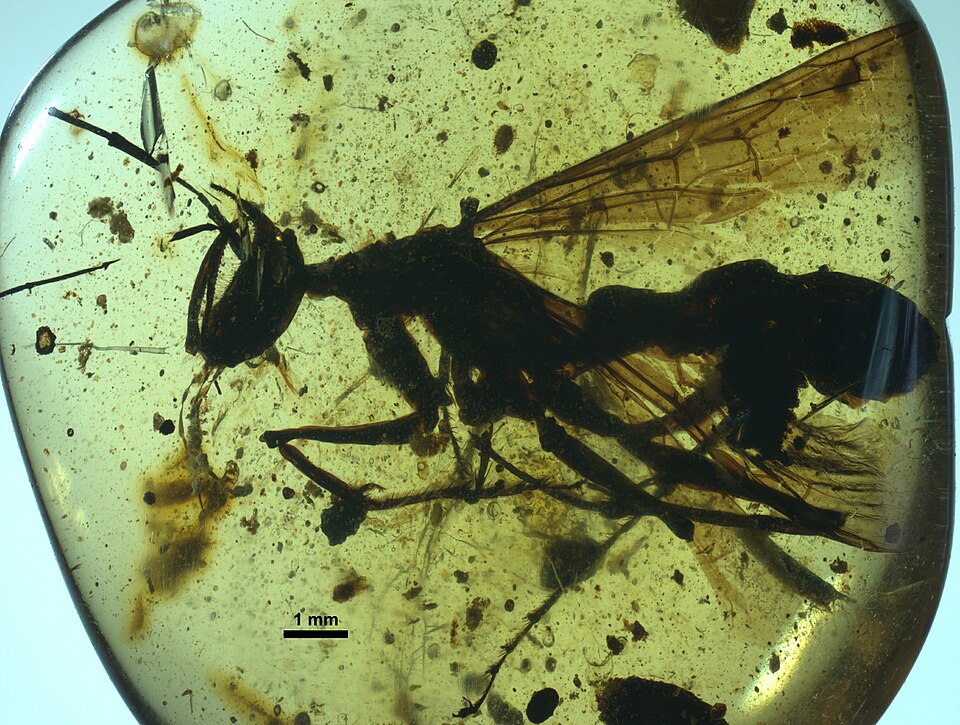
Anderson Lepeco is an entomologist at the University of São Paulo in Brazil, known for his significant contributions to the study of fossilized insects. He recently made headlines for discovering a remarkably preserved fossil of an ancient ant, Vulcanidris cratensis, which dates back 113 million years. This discovery challenges previous understandings of ant evolution and distribution, as it represents the oldest and most reliable ant specimen found to date, predating known specimens by 13 million years. Lepeco's work sheds light on the early adaptations and global dispersal capabilities of ants, marking a pivotal moment in the study of these ubiquitous insects.
Not in the pool (under ¢1).
Recent news mentions
Anderson Lepeco is the author from the Museum of Zoology at the University of São Paulo, Brazil, who declared the discovery of a new fossil ant species.
La hormiga fósil más antigua tiene 113 millones de años Dominican Republic· 2025-04-30
Dr. Anderson Lepeco is a paleontologist who discovered the Vulcanidris cratensis fossil while studying a collection at the São Paulo University Zoological Museum.
Index - Tudomány - Csak a véletlenen múlt, hogy rátaláltak, de aztán a tudósok szája is tátva maradt Hungary· 2025-04-29
Anderson Lepeco is a researcher at the University of São Paulo who discovered an extraordinary fossilized ant species.
Man recovered from ‘gladiator graveyard’ died of lion bite, study finds United States· 2025-04-27


Anderson Lepeco is an entomologist at the Zoology Museum of the University of Sao Paulo who commented on the ancient ant fossil.
Fosil semut tertua ditemukan di Brazil Malaysia· 2025-04-27
Anderson Lepeco, an entomologist at the University of São Paulo, is the lead author of the study and responsible for the discovery.
Un nuevo registro fósil demuestra que las hormigas conquistaron la Tierra hace 113 millones de años | Ciencia Spain· 2025-04-24