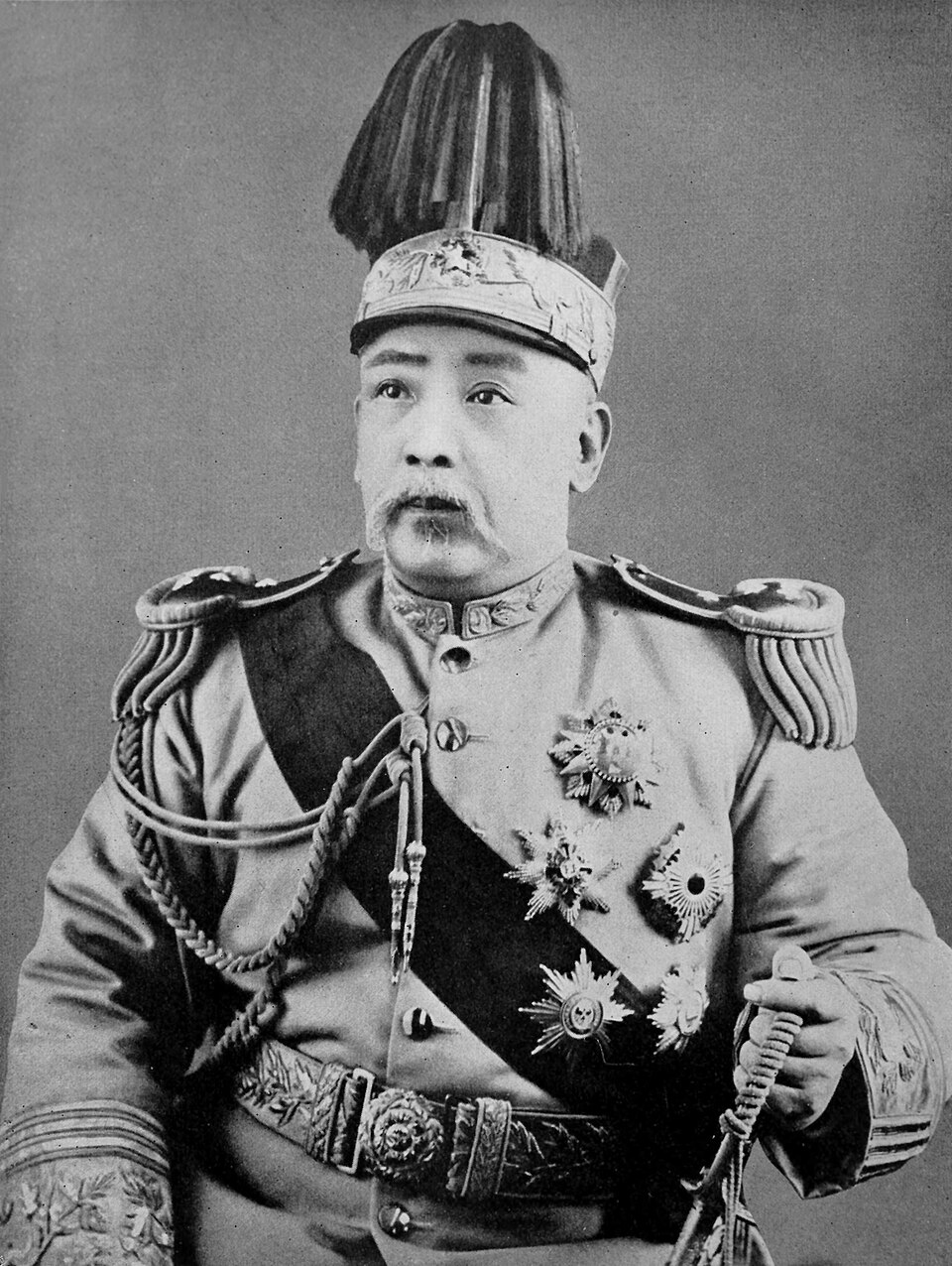
Yuan Shikai
Yuan Shikai was a Chinese military and political leader who played a pivotal role in the late Qing Dynasty and the early Republic of China. Born in 1859, he became known for his efforts to modernize China's military and government. After the fall of the Qing Dynasty in 1911, he briefly served as the first president of the Republic of China, declaring himself emperor in 1915 before being forced to abdicate. His legacy is marked by his attempts to centralize power and suppress dissent, which contributed to the political instability that plagued China in the following decades. Yuan's actions and policies significantly influenced the trajectory of modern Chinese history.
Not in the pool (under ¢1).
Recent news mentions
Lai Ching-te is compared to Yuan Shikai in terms of his actions.
台灣藍白陣營宣布提案彈劾賴清德 批其如袁世凱 (13:54) - 20251219 - 兩岸 - 即時新聞 Hong Kong· 2025-12-19
In 1914, then-president Yuan Shikai reinstated caning and exile as punishments.
Compulsory labor deters crime, not caning Taiwan· 2025-12-01

Yuan Shikai was the Chinese provisional president who promulgated regulations on the punishment of corrupt officials.
Reconsidering anti-corruption law - Taipei TimesTaiwan· 2025-09-20